A New Arrival for Maternity at MTW
Across the NHS, maternity units are often run as their own “mini hospitals,” operating on separate systems from the rest of the hospital. Part of the reason is the unique nature of patient movement and coordination in maternity care. Expectant mums typically move through two or three different locations during their stay, from antenatal to delivery to postnatal. Without centralised visibility, though, what should be a special time can too easily be characterised by delays and extra stress for new mothers, midwives, and support staff.
At Maidstone and Tunbridge Wells (MTW), patient experience is a strategic priority. For that to improve, though, solving patient flow was key. The Trust had embedded TeleTracking in medical and surgical areas and had seen the impact of a centralised operations, and were eager to implement it on the maternity unit.
The maternity unit at MTW spans two floors, which created a constant physical challenge for care teams. As one midwife described, “Just to get an accurate bed count, we’d be walking upstairs, writing numbers down on clipboards and pens, then coming back to report it to Delivery.” Change was welcome and expectant.
A Collaborative Solution
A core clinical and solution engineering team worked collaboratively to map out the patient journey, from antenatal to delivery suite to postnatal. Milestones were identified and incorporated into the TeleTracking system and the team validated the process step-by-step before the system went live.
A backbone of the solution is the Real Time Location System (RTLS)-enabled wristbands worn by every patient admitted into the unit. This ensures that every time a mother moves from antenatal to delivery to postnatal, their location is tracked and visible to care teams. At the conclusion of the patient journey, when new mothers leave the ward and drop off their RTLS wristbands into an auto-discharge box, this automatically triggers alerts for cleaning staff to prepare the room for the next expectant mother and automatically alerts the bed placement team that a bed is ‘coming up’ soon. Meanwhile, electronic whiteboards show real-time confirmed and pending discharges, so staff can see where beds are about to open, eliminating the need for phone calls, guesswork, or running up and down stairs.
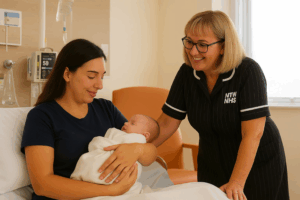
The Impact
MTW is the first NHS maternity unit in the UK to bring patient flow operations onto a single strategic healthcare platform – and they are seeing quicker turnaround than ever before.
More profoundly though, midwives and support workers feel empowered because they’ve been given the right tools. They are having proactive conversations about where to place incoming patients. With live information available, the number of daily meetings has been reduced from three or four to just two – giving nurses and midwives more time at the bedside.
As Midwife Sarah Cronin remarked, “Since the implementation of TeleTracking, it has promoted better teamwork on Postnatal. Everyone works together to manage the beds more efficiently and it helps to share the workload in times of high acuity.”
Wendy Martin – Service Improvement/Project Coordinator said, “The introduction of TeleTracking within our Maternity service has increased visibility of operational flow across our units and enables us to use real time data to assess, track and monitor our mums in order to deliver safe and effective care.”
Shiona Woodhams – Maternity Support Worker said, “TeleTracking is great, it gives a helicopter view of all of the units, our bed cleaning time has improved which helps with the discharges.”
From a data perspective, since the patient journey is timestamped at the entry and exit of each location, inefficiencies are no longer assumed but quantified. Hospital leaders can accurately assess where they should apply their efforts to make a safer and more comfortable experience for mother and baby.
The Results
Since go-live, MTW Maternity has seen:
- Faster bed turnaround: Bed cleaners are automatically dispatched when a bed is vacated
- Improved communication: Live visibility across both floors reduces enables instant data driven decision
- More clinical time: Centralised visibility gives more time back to the Midwives
- Proactive planning: Staff can plan earlier discharges and manage patient flow
Fittingly for maternity, it’s often the small human touches that matter most. Staff have reported greater satisfaction and simply experiencing a more joyful approach to midwifery.
Another string to Maternity’s bow which compliments the “Good” rating by the Care Quality Commission (CQC).
About the expert
The TeleTracking UK Blogging Team